What are sinuses?
Sinuses are air-filled cavities located within the bones of the face and head. They are connected to the inside of the nose through small openings. When your sinuses are functioning well, you don't even notice them, but when they get blocked or inflamed, they can cause significant discomfort and problems. This condition is known as sinusitis.
What is sinusitis?
Sinusitis is the inflammation or infection of the sinuses, often caused by blocked sinuses. It leads to a range of symptoms including:
- Blocked or stuffy nose
- Pressure or congestion in the face
- Runny nose or mucus buildup
- Headaches
- Loss of sense of smell
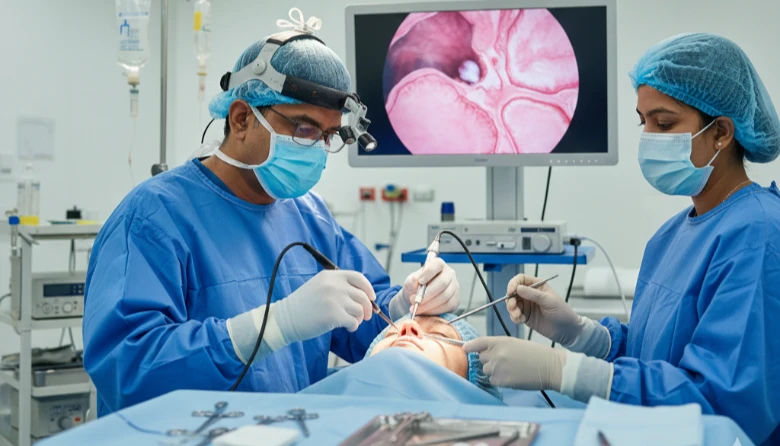
Sinusitis can be challenging to diagnose, so your specialist may need to examine your nose using a small telescope (endoscope) to identify what's going wrong.
What is Endoscopic Sinus Surgery (FEES)?
When sinus issues don't improve with medication (antibiotics or nasal sprays), endoscopic sinus surgery might be the next step. This surgery is minimally invasive and is done through the nostrils with no cuts or stitches on the face. The procedure helps clear blocked sinuses, often offering relief when other treatments haven't worked.
Do I need to have the operation?
Typically, surgery is considered only when medical management (like antibiotics and steroids) fails to provide relief. Surgery is usually not the first option unless symptoms persist despite ongoing treatments.
How is sinus surgery done?
Sinus surgery is typically performed under general or local anesthesia. The surgeon uses a small telescope and specialized instruments to gently remove any bone or swollen tissue blocking your sinuses. Once the sinuses are cleared, inflammation reduces, and the symptoms usually improve.
What is septal surgery?
The septum is the cartilage and bone inside your nose that divides it into two halves. If the septum becomes crooked or deviates (often due to injury or natural growth), it can block one or both sides of the nose, making it hard to breathe. This condition is known as septal deviation.
Do I need septal surgery?
A deviated septum doesn't usually cause harm, but if it blocks your nasal passages and affects your breathing, it might be worth considering surgery. The decision is personal and depends on whether the condition significantly impacts your quality of life.
How is septal surgery done?
Septal surgery (also called septoplasty) typically takes 30-45 minutes and is done entirely through the inside of the nose. There are no visible scars or bruises on the face. In more complex cases, a small incision may be made across the skin between the nostrils, and the procedure might be combined with a rhinoplasty (nose reshaping) to improve the appearance of the nose.
What are packs and splints?
After septal or sinus surgery, packs (dressing inside the nose) are often used to help with bleeding and healing. These packs may temporarily block your nose, forcing you to breathe through your mouth. They are usually removed the morning after surgery. In some cases, splints (small pieces of plastic) may be placed inside your nose to prevent scar tissue from forming. These are removed after about a week.
Does sinus and septal surgery hurt?
It's common to experience some blockage and mild discomfort in the nose after the surgery. This pain can usually be managed with simple painkillers. If you develop severe headaches or any unusual pain, contact your doctor immediately.
Can I blow my nose?
It's crucial not to blow your nose for the first 48 hours after the surgery, as this could disturb the healing process. After this period, your surgeon will guide you on when it is safe to gently blow your nose. Also, try to avoid dusty or smoky environments while recovering.
How long will I be off work?
You may be able to go home on the same day or the day after the surgery, depending on the complexity. Rest at home for at least a week is recommended, and most people return to work and normal activities within 10-14 days after surgery.
What are the risks and complications?
While complications from sinus or septal surgery are rare, they can occur. The risks include:
- Minor eye complications: Happened in 1 in every 500 surgeries.
- Spinal fluid leaks: Occur in 1 out of every 1,000 surgeries.
Despite these risks, the chances of severe complications are minimal. If you have concerns, ask your surgeon about their experience and any steps they take to minimize risks.
Conclusion
Septal and sinus surgeries can significantly improve your quality of life if you suffer from chronic sinus issues or a deviated septum. The procedures are generally safe, minimally invasive, and offer quick recovery times compared to traditional surgeries. If you've been struggling with ongoing sinus issues or breathing difficulties, consult a specialist to see if these surgeries are the right solution for you.
Latest Blogs

A simple guide to gallstones: laparoscopic surgery, treatment and recovery tips
8th Oct, 2025
Kidney stones: causes, symptoms, treatment and prevention
15th Oct, 2025

Understanding hypertension: symptoms, causes and practical tips for control
22nd Oct, 2025
Everything you need to know about laparoscopic gynaecology
29th Oct, 2025